Case Study · Global UX Research · Localization · Cross-Cultural Design
UX Without Borders: Localizing HiveTracks for Women Beekeepers in Uzbekistan and Ethiopia
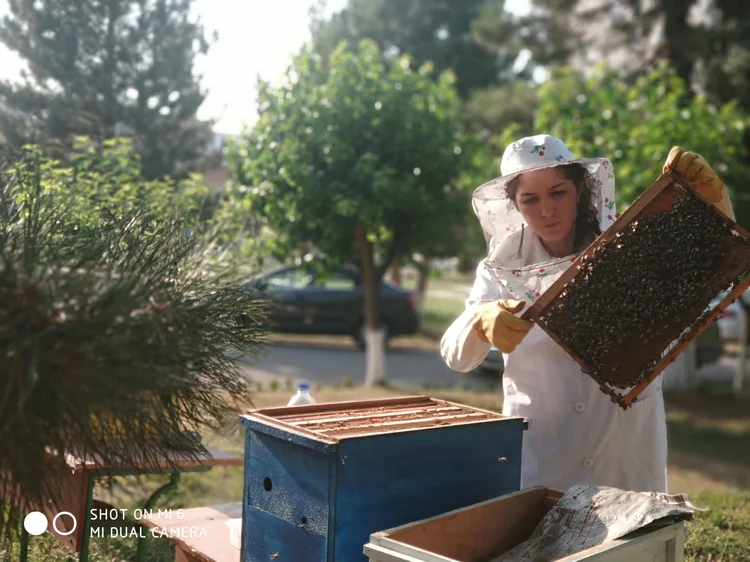
In 2021, HiveTracks received a grant to localize our mobile beekeeping app for women beekeepers in Uzbekistan and Ethiopia. I designed and led the entire research process, remote 1-on-1 interviews through translators, translated prototype testing, and eventually traveling to Uzbekistan to meet the women I'd spent months researching with in person.
44
Beekeepers interviewed, 24 in Uzbekistan, 20 in Ethiopia
3
Languages localized, Uzbek, Russian, and Amharic
3
Core user flows prototyped and translated for testing
1
In-person research trip to Tashkent and Bukhara
Background
In the United States and much of Europe, beekeeping is a hobby, a fulfilling, challenging pastime. But for many people in the Global South, beekeeping is a livelihood. It is how families make a living and how knowledge passes between generations.
In 2021, HiveTracks received a grant through the AID-CSB project with ICARDA to localize our mobile beekeeping app for beekeepers in Uzbekistan and Ethiopia, with a specific focus on women beekeepers and how best to serve them. I was brought in to lead all of the research and design work.
The central questions I needed to answer: How did beekeeping practices and challenges in Uzbekistan and Ethiopia differ from those in the US? What were the similarities? And what specific barriers did women face that male beekeepers in the same communities didn't?
Phase 1: Research Design, Why 1-on-1, and Why It Mattered
Before setting up a single interview, I made a deliberate methodological choice: all interviews would be conducted one-on-one rather than in groups. This wasn't just a preference, it was essential to the research.
In both Uzbekistan and Ethiopia, women are not typically expected to share their opinions openly, particularly in contrast to men. In a group setting, some participants dominate, others stay silent, and the data skews toward whoever speaks most comfortably in public. A 1-on-1 structure creates a private, low-pressure environment where women can speak candidly, about their practices, their struggles, their ideas, without social constraint.
Getting that choice right at the start shaped every insight that followed.
The logistical reality
Conducting 44 individual interviews across two continents in 2021 came with compounding challenges:
The pandemic. Fieldwork was off the table. All interviews had to be conducted remotely over Zoom, which meant requiring stable wi-fi, laptops, and a central meeting location for participants, easy to arrange in Uzbekistan, genuinely difficult in Ethiopia.
Time zones. Morning in Tashkent and Addis Ababa is 9 PM to sometimes 3 AM in Los Angeles. I restructured my schedule entirely for the duration of the project and drank a lot of coffee.
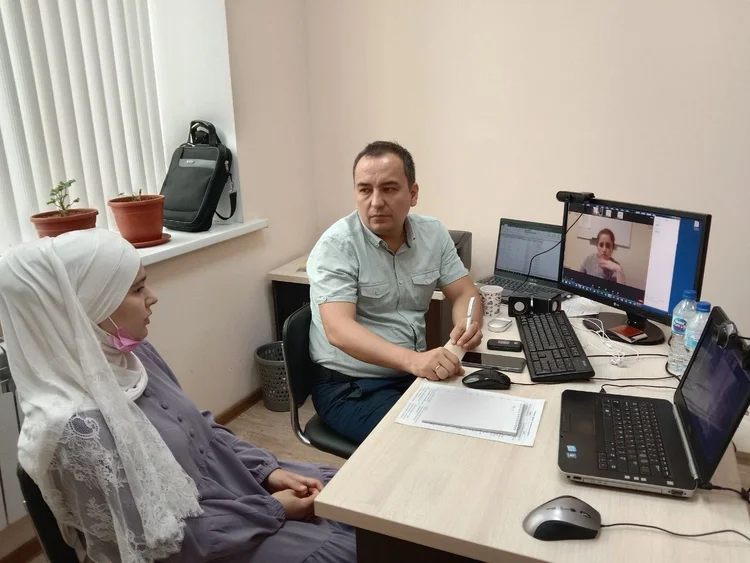
Language barriers. I worked with professional translators in both countries, Farkod in Uzbekistan, and an interpreter in Ethiopia, who translated my questions and the beekeepers' answers in real time. Once the translators were in the room, the language barrier essentially disappeared. What remained was genuine conversation.
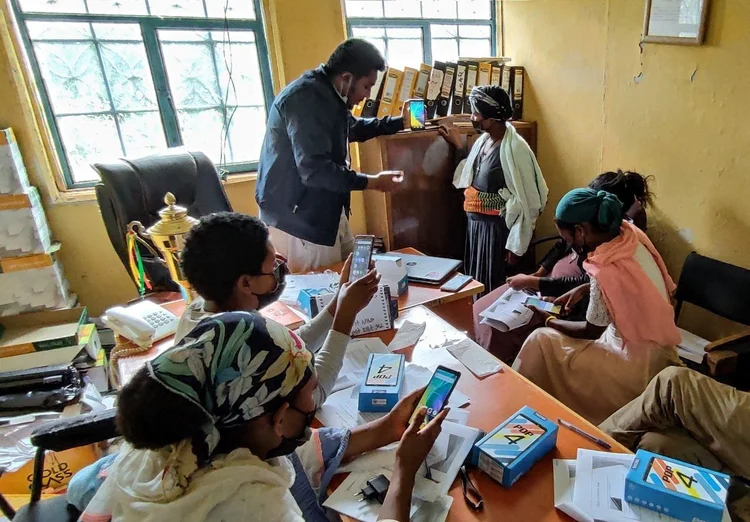
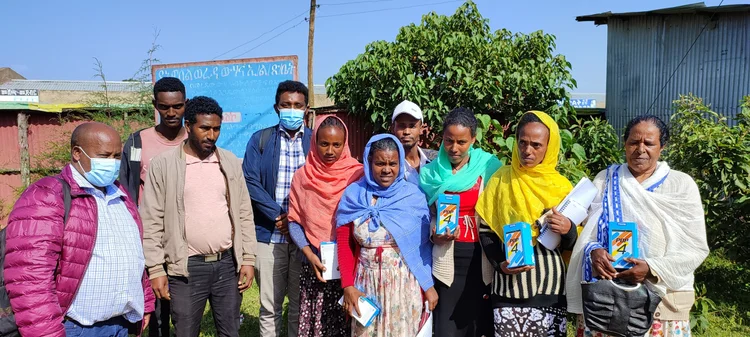
Technology access. Participants in Uzbekistan were comfortable with smartphones. In Ethiopia, our partners had to organize mobile phone training sessions before prototype testing could even begin. This was a signal in itself about where the app localization needed to meet users.
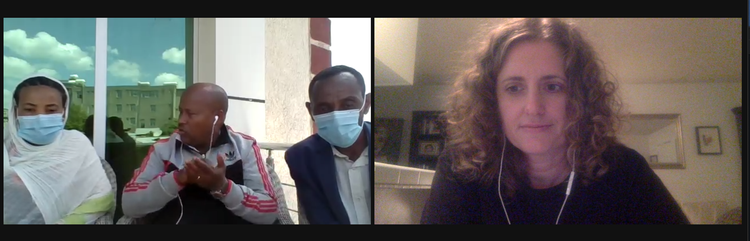
"It was magical. The language barriers melted away and we were able to connect on different sides of the world."
— My field notes, January 2021
What the Research Revealed
I interviewed 24 beekeepers in Uzbekistan and 20 in Ethiopia, almost all women. The eldest was in her 70s. The youngest was 12. I gathered demographic information and documented each beekeeper's practices, concerns, environment, and relationship to the app in detail before synthesizing across both cohorts.
Key findings
Uzbekistan and the US were more similar than different. Hive types, inspection practices, and common diseases aligned closely. The biggest divergence was context: where US beekeepers worried about hobby optimization, Uzbek beekeepers worried about their families' income.
Ethiopia was a different beekeeping world entirely. Traditional hive types, different pest pressures, and a cultural relationship to bees that didn't map onto Western app assumptions. The app needed meaningfully different adaptations for Ethiopia than for Uzbekistan, the same feature couldn't simply be translated, it had to be reimagined.
Pesticide contamination was Uzbekistan's sharpest pain point. Every beekeeper I spoke with raised it unprompted. Neighboring agricultural spraying contaminated honey and made export impossible, cutting beekeepers off from broader markets. Uzbekistan also had a unique regional pest, the bee eater bird, that US-based app content had never accounted for. Localization meant more than language.
Women faced barriers men in the same communities didn't. Culturally, women weren't expected to lead or speak authoritatively in mixed settings, which shaped how they engaged with tools and training. Physically, heavy equipment and apiary locations (often deliberately situated away from homes) created access barriers. The app had to serve women operating under these specific constraints, not a generic "beekeeper" abstraction.
Uzbek beekeeping also followed a very specific seasonal rhythm, beginning in March once temperatures rose above 10°C, winterizing in November, and beekeepers relied heavily on informal knowledge networks: mentors, a community beekeeping group on Telegram, and YouTube. Almost every operation was a family business, selling honey at bazaars, sanitariums, supermarkets, and directly to neighboring villages. Understanding this context was essential to designing an app that fit their actual lives.
I compiled the full Uzbekistan findings into a presentation deck shared with the team: View the UX Across Time Zones research presentation →
Phase 2: Localization Design, The Translation Challenge
After synthesizing the interviews, I designed prototypes for three core user flows that needed to be adapted and localized: apiary and hive setup, inspections, and to-dos. These were the workflows most affected by the differences in local beekeeping practices, the flows where a direct translation of the US version would either confuse users or simply not match how they managed their hives.
Uzbekistan and Ethiopia needed different adaptations from each other, which meant I was designing parallel versions: one set for Uzbek/Russian speakers in Uzbekistan, one for Amharic speakers in Ethiopia.
The translation process
Here's what most case studies about localization skip: the translation itself is a design problem. It's not just handing copy to a translator and getting it back. Every screen has character limits, text wraps differently in right-to-left vs. left-to-right scripts, beekeeping terminology doesn't always have direct equivalents, and a word that sounds technical in English might sound completely natural in Uzbek, or not exist at all.
My process: I built a spreadsheet containing every line of text across every prototype screen. The translators worked through each line carefully, flagging terminology questions and providing both a direct translation and a natural-language alternative where they differed. I then manually copied each approved translation back into the Figma prototypes, screen by screen, field by field, so that every participant could test in their own language.
This step was non-negotiable. Users cannot meaningfully evaluate a prototype in a language they don't read. Prototype testing in the user's native language isn't an extra, it's the minimum requirement for valid data. It also allowed us to refine the Uzbek beekeeping vocabulary collaboratively, since some technical terms needed to be agreed upon by the beekeepers themselves.
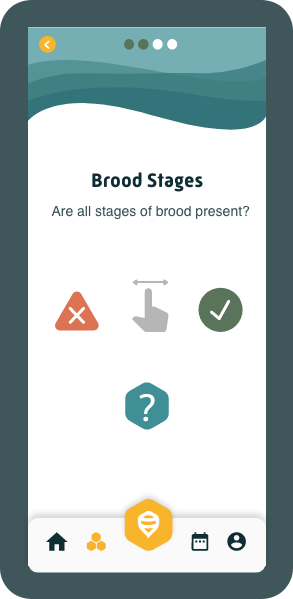
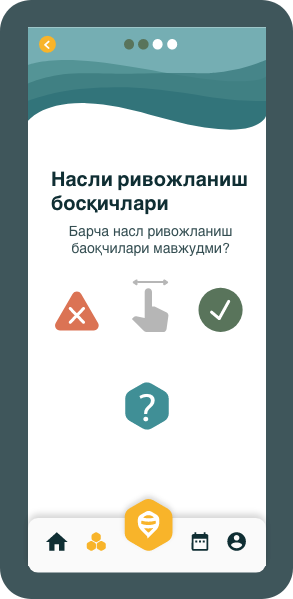
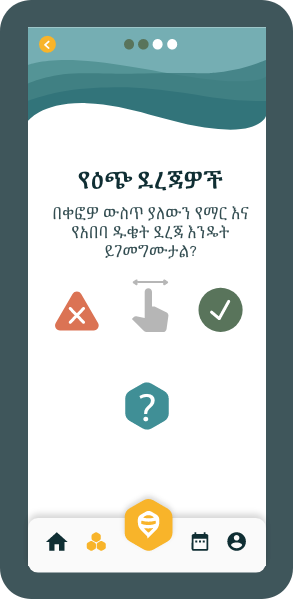
The same Brood Stages inspection screen, translated for each country, same layout, same tap-based interaction, three completely different vocabularies.
Phase 3: Prototype Testing, And When Things Go Wrong
Prototype testing sessions were conducted remotely with beekeepers in both countries, using the fully translated prototypes. I facilitated sessions through translators, asking participants to work through each flow and narrate their experience. The findings drove a prioritized set of iterations before the localized app was built.
One of the most valuable outcomes was that beekeepers didn't stop engaging after the testing sessions were over. The Uzbek beekeepers in particular continued offering feedback and suggestions as the work progressed. They became genuine collaborators in the design process, not just research subjects.
When the connection dropped
In Ethiopia, the technology barrier made one session impossible to run as planned. Connectivity failed mid-session, and I lost the call entirely. My translator stepped in, ran the prototype test on his own using the question guide I'd prepared, and collected the feedback himself. He did an excellent job. But it was a real reminder that in cross-cultural fieldwork, your infrastructure is part of your methodology, and when it fails, your local partners are your backup plan.
And then there was the food poisoning
During a run of Uzbekistan prototype sessions, I got food poisoning. I tried to push through and hide it, which, in retrospect, was both determined and slightly ridiculous. Eventually my translator Farkod looked at me and said, plainly: "Sarah. You're sick." He postponed the session on my behalf. The beekeepers spent the rest of the evening asking the team how I was doing and whether I'd recovered.
It's a small story, but it stuck with me. I was on a laptop in Los Angeles at 1 AM, communicating through a translator with women I'd never met, across 10 time zones, and they were genuinely concerned about me. I always try to remember that I'm building for real people, and I put real effort into connecting with the humans behind my research. But this moment hit differently: we were ten time zones apart, communicating through a translator, and they were still genuinely concerned about me.
Phase 4: Closing the Loop, Visiting Uzbekistan
After the localized app shipped, we had the opportunity to visit beekeepers in person. I had originally planned to travel to both Uzbekistan and Ethiopia. A civil war broke out in Ethiopia, so I was unable to visit; however, I got on a plane to Tashkent.
I spent time in both Tashkent and Bukhara, two of the most beautiful cities I've ever seen, meeting the women I'd been interviewing over Zoom for the better part of a year. We held workshops. I visited apiaries. I saw, in person, the hive setups I'd been designing for on a screen in Los Angeles. I ate the most delicious food (everyone must try plov!), tried Uzbek honey (also amazing!), and visited a bookstore and bought a copy of Harry Potter in Uzbek and a Dostoevsky novel in Russian.
The visit made my research come to life. Learning in person from Uzbek beekeepers and walking through their apiaries gave me true perspective.
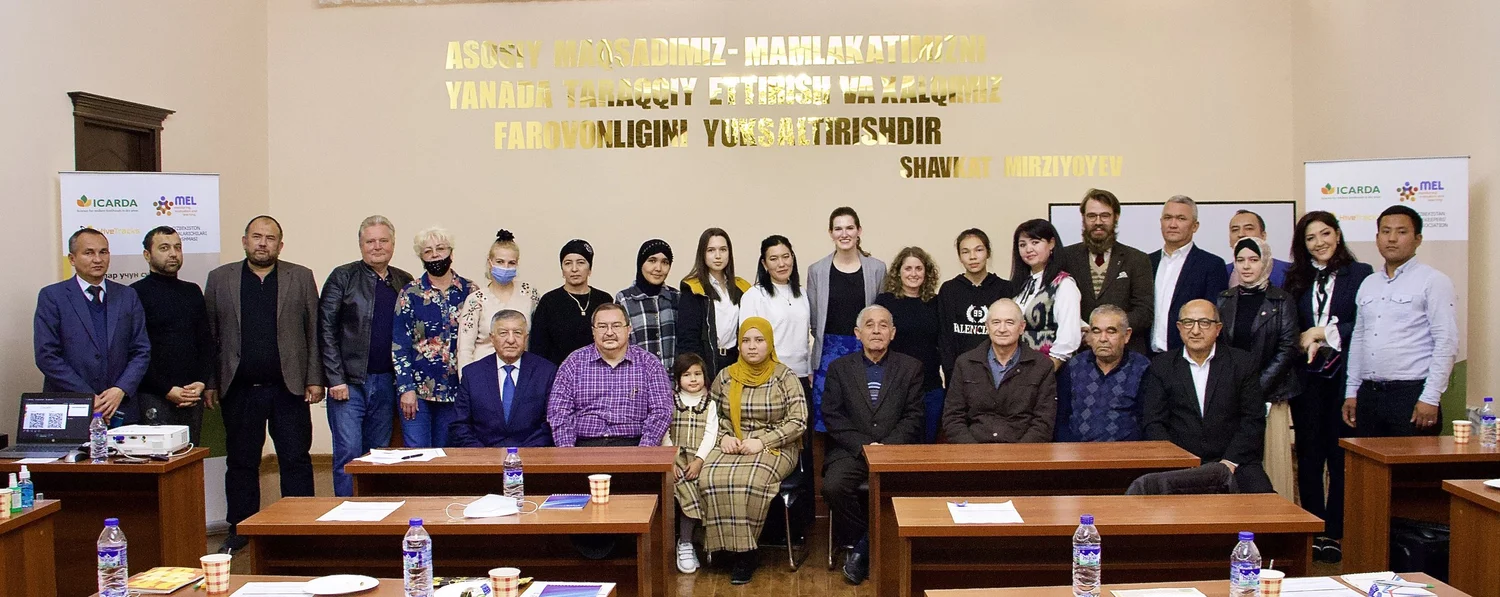
Final ICARDA workshop, Tashkent, meeting the beekeepers I'd spent a year working with over Zoom
"User Experience really can cross borders, and is a wonderful opportunity to connect with your users in other countries to make sure you're solving problems for all your users equally."
— My reflection from the Uzbekistan trip
What This Project Taught Me
Most UX work happens close to home, same country, same language, broadly similar cultural context. This project stripped all of that away, and what remained was the fundamental practice: listen carefully, respect context, design for actual lives.
The decision to conduct 1-on-1 interviews rather than group sessions wasn't just a methodological preference, it was a cultural read that determined whether the research would work at all. The translation spreadsheet wasn't a process artifact, it was a design tool that shaped the vocabulary of the entire localized product. The visit to Uzbekistan wasn't a reward at the end, it was the moment the full research loop closed, and when I understood what "knowing your users" actually means.
The project also produced a published white paper, which you can read for the full findings and methodology. It was the best UX experience of my career, and I'll always be glad it took me somewhere strange and hard and irreplaceable.
Read the published project report →
Listen: Beekeeping Today podcast, HiveTracks 2022 Update & AID-CSB Partnership →
ICARDA: Digital Support for Women Beekeeper Entrepreneurs in Ethiopia →