Case Study · End-to-End Product Ownership · Mobile
From Research to Revenue: Launching HiveTracks AI Voice Inspection
I ran the customer research that proved which AI feature to build, recruited and managed the beta program, designed the full Pro paywall for iOS and Android, and wrote the marketing campaign for launch, all while serving as Head of Product Design, Customer Success, and Marketing.
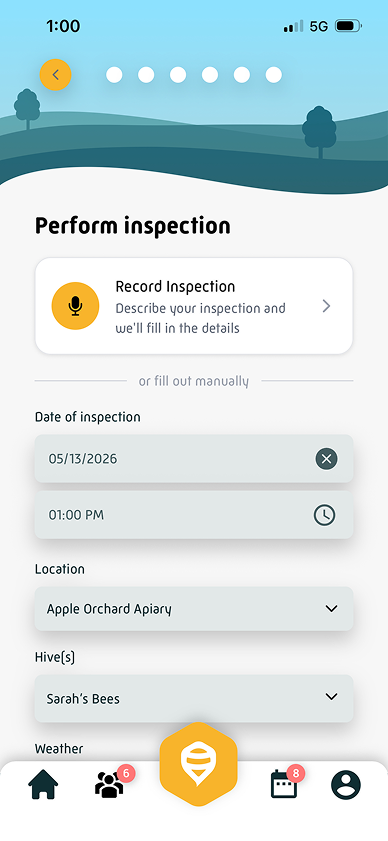
Inspection setup
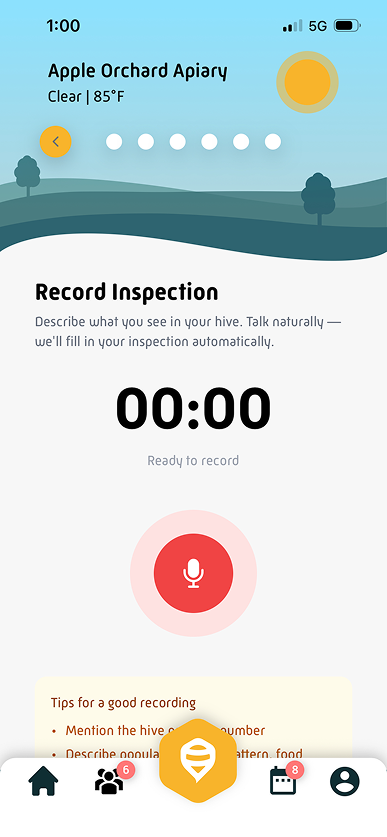
AI voice recording
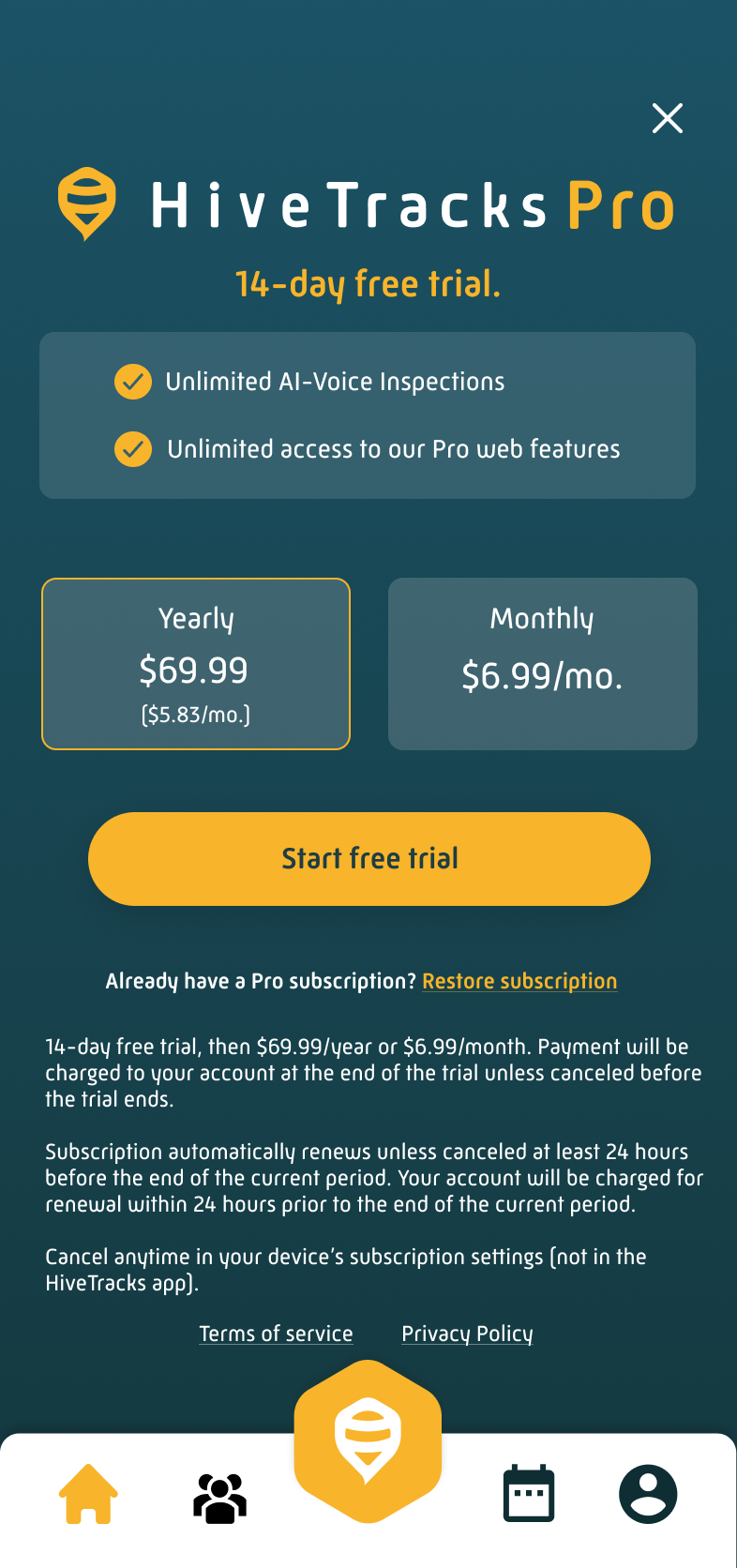
HiveTracks Pro paywall
14
Customer interviews across 2 months
85
Survey responses, 68% completion rate
#1
AI feature ranked by beekeepers, data drove the build decision
11
Beta testers recruited & managed end-to-end
Background
HiveTracks is a mobile app used by beekeepers worldwide to manage hives, log inspections, track treatments, and monitor colony health. In early 2026, the team was evaluating a significant product expansion: integrating AI into the core inspection workflow. There was internal appetite to build an AI feature, but no clear data on what users actually wanted, or whether AI would resonate with our large community of beekeepers.
As Head of Product Design, Customer Success, and Marketing, I owned the process of figuring that out, and then took the feature all the way to launch. This meant conducting structured research, synthesizing insights that shaped the product roadmap, running the beta program, designing the monetization layer, and writing the marketing that introduced it to users.
Phase 1: Customer Discovery, Understanding the Real Problem
Before any AI discussion, I needed to understand what was actually getting in beekeepers' way. I ran two consecutive months of one-on-one customer interviews, seven beekeepers in January, seven more in February, across a wide range of contexts: first-year hobbyists, small commercial operators scaling to 50 hives, and beekeepers from five US states, Canada, and Kenya.
Each interview followed a semi-structured guide focused on actual workflow, not the app. I asked about what happened during and after inspections, how they captured notes, where they felt uncertain, and what challenges were holding them back. I synthesized each month's interviews into a full report with quantitative patterns, user segments, and strategic takeaways.
What the research revealed
86% of beekeepers can't use their phones during inspections. Gloves, propolis on screens, bee suits, and time pressure meant nearly everyone was recording notes after the fact, in the truck, from memory, or on paper.
71% were already improvising voice workflows. Beekeepers were narrating inspections into voice memos or filming themselves mid-hive, then manually transcribing later. They'd built the workaround. They just needed the app to close the loop.
Fear of colony loss drives almost every behavior. "Help me not lose my bees" emerged as the emotional job-to-be-done across every segment. Analytics, recording, reminders, all of it was downstream of this. Any AI feature that didn't speak to this fear would miss the mark.
Needs differ sharply by scale. Beginners needed sequenced guidance ("what do I do next?"). Serious hobbyists needed better records without friction. Scaling operators needed speed and exception-based logging. A single AI solution wouldn't serve all three equally.
"Beekeepers are not struggling with data, they are struggling with time, sequencing, and decision confidence."
— February 2026 Customer Interview Report
Phase 2: Feature Prioritization, Choosing the Right AI Feature
Customer interviews surfaced clear demand for AI, but not a single obvious solution. Two strong candidates emerged: an AI voice recording feature that would transcribe inspection notes hands-free in the field, and an AI chatbot that would analyze a beekeeper's historical data and offer personalized recommendations.
In March, I ran a concept-testing round to assess the chatbot idea, structured conversations focused on what beekeepers expected from an AI advisor and whether they'd trust it. This ran in parallel with a broader survey I designed and launched to quantitatively rank all candidate AI features.
The data made the decision
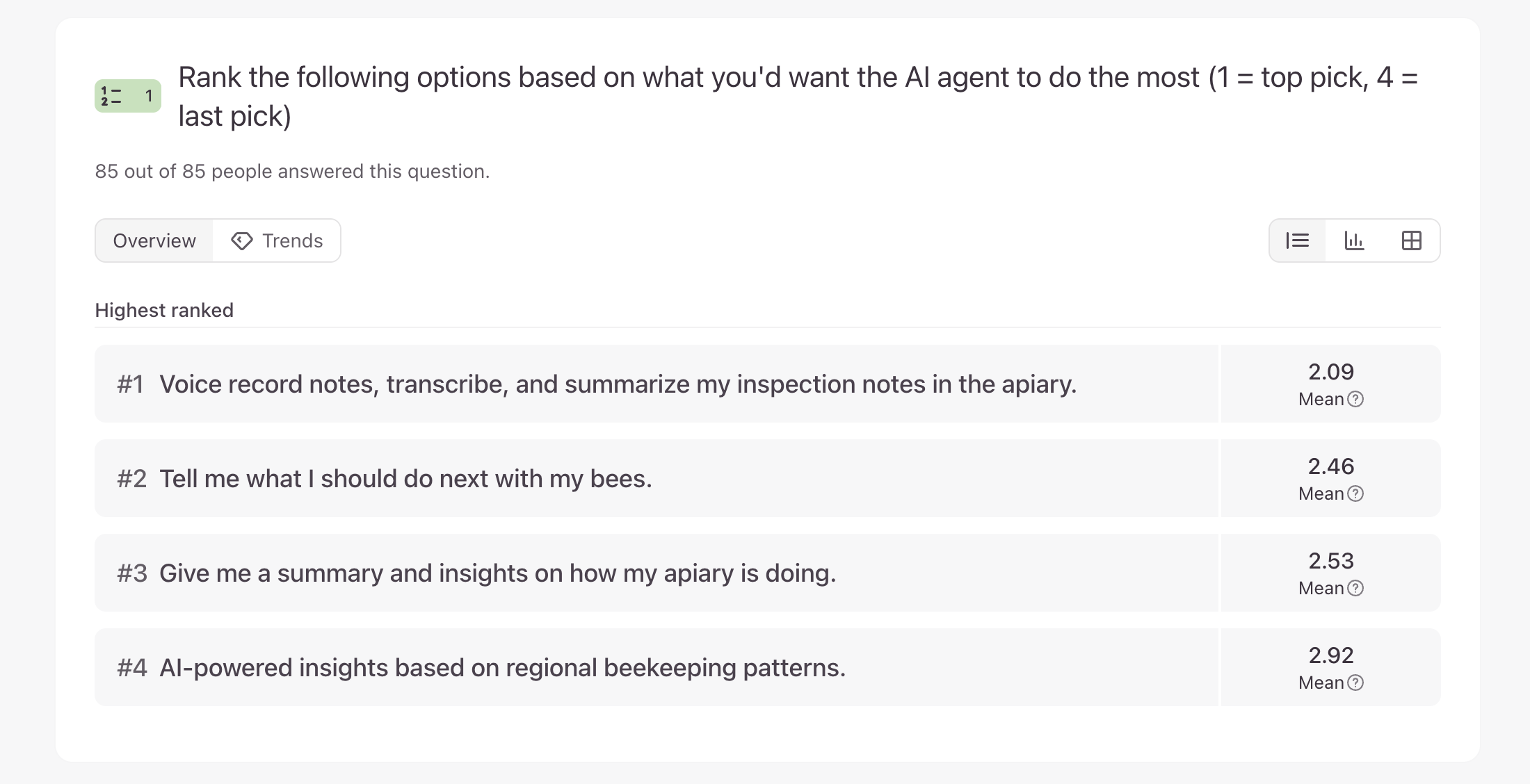
The survey ran to 182 views, generating 85 completed submissions at a 68% completion rate, strong signal for a niche audience. The ranking question asked beekeepers to prioritize four AI use cases from most to least wanted (1 = top pick):
Voice record, transcribe, and summarize inspection notes in the field. Mean rank: 2.09, the clearest winner by a meaningful margin.
Tell me what I should do next with my bees. Mean rank: 2.46, strong demand, but secondary. This validated the AI chatbot concept as a future investment, not the first build.
Give me a summary and insights on how my apiary is doing. Mean rank: 2.53.
AI-powered insights based on regional beekeeping patterns. Mean rank: 2.92, least prioritized, consistent with the interviews finding that generic guidance has limited value to beekeepers who trust local knowledge above all.
This data, combined with the behavioral evidence from interviews, that 71% were already improvising voice capture, gave us a clear mandate. I presented the research synthesis to the team and we aligned on building AI Voice Inspection first. The chatbot concept was documented as a validated future opportunity.
Phase 3: Beta Testing, Getting Real Feedback in Real Apiaries
Once the development team had a working build of the AI Voice Inspection feature, I designed and ran the beta program. I recruited 11 beekeepers representing the full range of our user base, hobbyists with 2–3 hives, serious operators managing 12+, and commercial-adjacent users running multiple apiaries, across multiple US regions.
I onboarded each tester individually, set expectations for the feedback I needed, and maintained ongoing communication throughout the program. After collecting feedback, I synthesized all responses into a structured report covering what was working, critical bugs, feature requests by priority, and individual tester sentiment.
Read the beta feedback synthesis report →
What we learned from the field
The core concept landed exactly as hypothesized. The hands-free flow resonated immediately. Multiple testers independently described relief from typing with gloved hands as the standout benefit, validating the research-driven rationale for building this feature first.
AI accuracy exceeded expectations. The transcription handled beekeeping-specific terminology well, and the full raw transcript as a backup was called out as a key confidence builder. Testers felt safe using it because they could review and correct.
Reliability issues surfaced that needed resolution before broader launch. A subset of testers encountered lost recordings, a wrong-hive assignment bug, and crashes. These were documented and escalated as pre-launch blockers.
High-priority feature requests were clear and consistent. Multi-hive recording in a single session, voice-activated start/stop, and the hive name appearing in the AI summary emerged from multiple independent testers, indicating these weren't edge cases but genuine workflow needs.
"SOOOO great to get away from typing inspection reports with gloves."
— Bernard, beta tester managing 12 hives
Phase 4: Paywall Design, Monetizing the Feature
AI Voice Inspection would launch as a HiveTracks Pro feature, the cornerstone of a paid subscription tier. I owned the full design of the paywall experience on both iOS and Android, including the value proposition, pricing structure, UI layout, and all copy.
The core design challenge was translating a technical capability (AI transcription) into a compelling upgrade moment for beekeepers who don't think of themselves as software users. The language had to feel useful, not salesy, and the pricing had to feel fair to a community of hobbyists and small operators.
Design decisions
Lead with the behavior, not the technology. The paywall headline wasn't "AI-Powered Inspections", it was "HiveTracks Pro," with benefits framed as "Unlimited AI-Voice Inspections" and "Unlimited access to Pro web features." Beekeepers want to work better, not adopt AI.
14-day free trial as the primary CTA. Given the core user anxiety around commitment (the same anxiety that drives their beekeeping decisions), a trial reduces friction and lets the product prove its value before asking for money.
Yearly plan anchored as the default selection. At $69.99/yr ($5.83/mo), it breaks down to less than a cup of coffee per month, a comparison that resonates with beekeepers who already spend significantly more on hive equipment. The yearly option was pre-selected in the UI.
Platform-native payment flows. I designed the paywall to hand off cleanly to iOS App Store and Google Play confirmation flows, matching each platform's native conventions so the transition felt trustworthy, not jarring.
Pro paywall
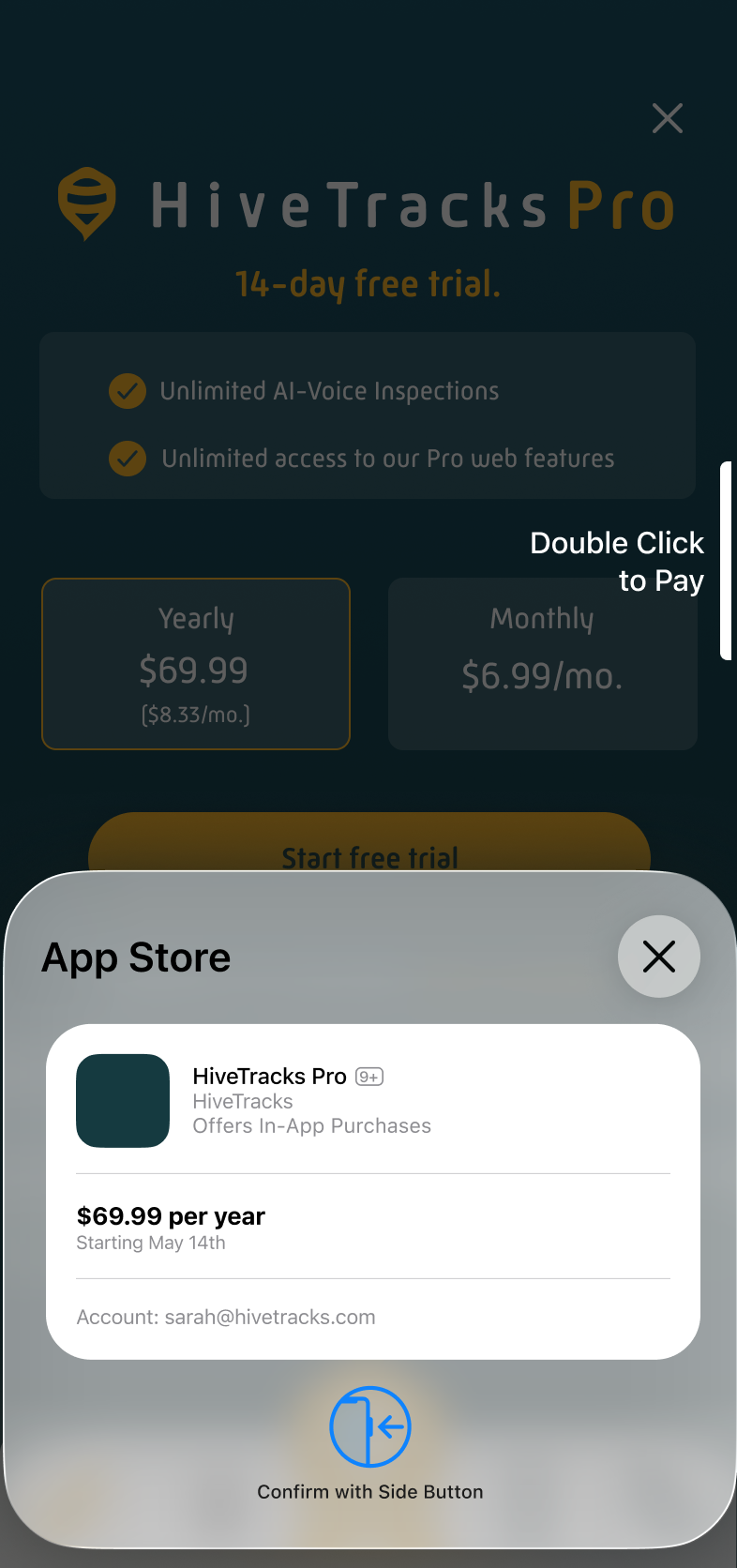
iOS confirmation
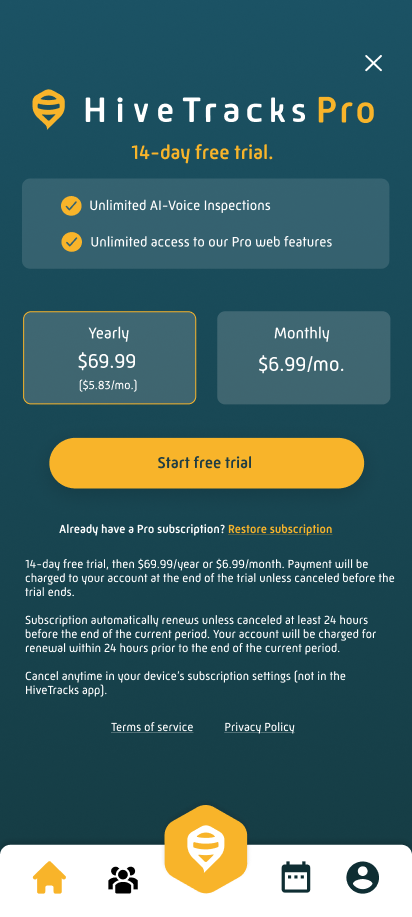
Android confirmation
Phase 5: Marketing Campaign, Closing the Loop with Users
Most feature launches ask users to take a leap of faith. This one didn't have to.
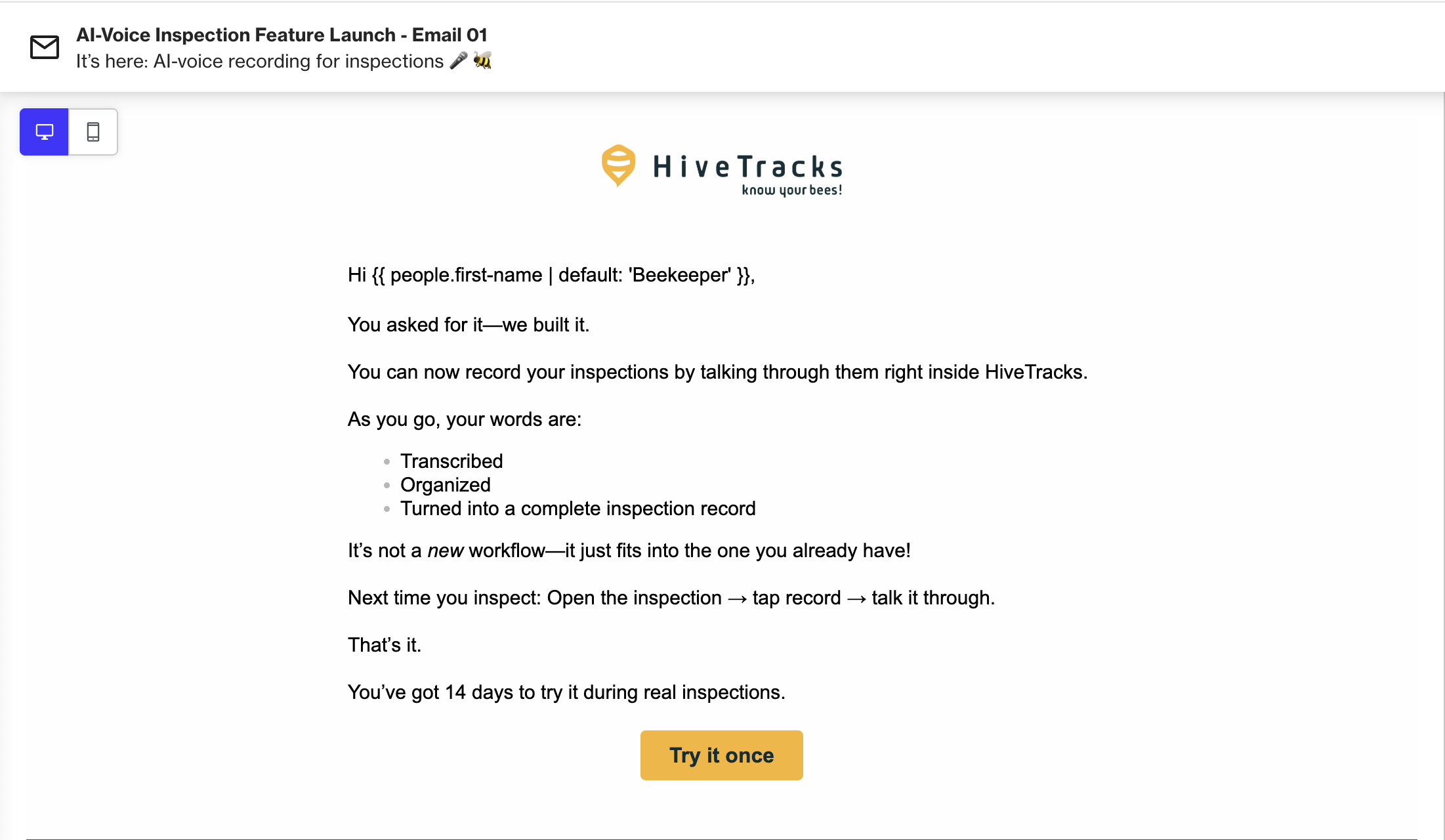
Because AI Voice Inspection was built directly from what users told us in interviews and confirmed in the survey, the launch email could do something unusual: tell them so. The core message was simple — this is the feature you asked for, we built it, and here's how to try it free for 14 days.
That framing is more persuasive than any benefit claim because it's true and users know it. It respects the community's intelligence, closes the loop on the research, and positions HiveTracks as a team that actually listens. For an audience of hands-on, practical people who are skeptical of tech hype, that authenticity matters.
The rest of the campaign language was grounded in the same research: the relief of hands-free recording in the field, the confidence of having a record you can trust, the peace of mind of not losing notes. Beekeepers care about survival, not dashboards.
The paywall designs have been handed off to the engineer, beta bugs have been turned into tickets, and the launch is queued for early summer 2026.
What This Project Demonstrates
The thing I'm proudest of in this project isn't any individual deliverable, it's the connective tissue. The survey ranking data didn't just validate a hunch; it settled an active internal debate about which AI feature to build first. The beta feedback report didn't just surface bugs; it gave the team a prioritized, evidence-based list of what to fix before launch and what to plan for next. The paywall copy wasn't written to a brief, it was written from the research.
Owning a product arc from discovery to revenue makes you a different kind of researcher, designer, and writer. Every decision you make earlier shows up later. When I was writing paywall copy, I was drawing directly on user quotes I'd gathered four months before. When I was synthesizing beta feedback, I was cross-referencing it against interview patterns I already knew. The work compounds.
I also learned how to make a hard call with imperfect data. The survey pointed clearly to voice recording. The March concept testing gave nuance on the chatbot's potential. The decision to build voice first and document the chatbot as a validated future opportunity, rather than doing both poorly, is the kind of judgment that's hard to teach but easy to demonstrate.
Try HiveTracks free
Free to download and easy to preview — see the onboarding flow, AI Voice Inspection, and paywall firsthand.


On a laptop? Scan a QR code to download →